
Search Results

As a sole earner I have struggled to afford fresh and healthy food as an adult on a small monthly budget - relying on reduced sections and creative meal planning to get by. I see the same struggle in my community daily. That’s why I’ve spent the last four years as a volunteer cooking free meals with FoodCycle in south London and I’m proud to now be a Food Ambassador, fighting for food justice. Nutritious food should be accessible to all which is a topic I am truly passionate about and breaking down the barrier to elevate this. In addition, I want to spear head food education and how to cook nutritious meals from scratch and an affordable price and minimise food waste. Food waste is a huge issue and one that needs to be tackled head on in the home with the support of Governments. Not just to prevent food to landfill and environment implications but to re-direct this food to those who need it. Everyone deserves access to nutritious food - no matter their income. Food is a right, not a privilege, which we need to stand up together for those in power to listen.
Favourite bean, pulse or legume: Black Bean

I'm adult Food Ambassador based in Edinburgh. I volunteer at a foodbank, and this opened up my interest in what is "good food"? What is "nutritious" and why good and nutritious food is the key for good health. As an advocate, I strive for policies making this food affordable and available, educating the end users (consumers) on the need.
Favourite bean, pulse or legume: Black Eyed Beans

I know what it's like to be in receipt of Free School Meals and this is why I joined the Food Foundation as a young Food Ambassador, campaigning to create a healthier, more affordable and sustainable food system for all. I am on the Barnet Council’s youth board, a Young Conservative and also active in mental health groups across the UK.
Favourite bean, pulse or legume: Green lentils

A single mum who experienced food insecurity in the past (as a young adult and a parent). What helps her to navigate the convoluted food environment are her knowledge in nutrition and budgeting skills. Nevertheless, being a registered Associate Nutritionist while living in a deprived area is not enough - she wants to see less junk food around as both she and her daughter see the impact of it. She would like the school food to be nutritionally adequate, also food lessons in schools to teach practical skills reflecting the current reality, and healthier food to be the cheaper, easier and fairer option.
She finds all pulses tasty especially the humble red kidney beans which can be easily used in savoury dishes or turned into a chocolate cake.
Favourite bean, pulse or legume: red kidney beans
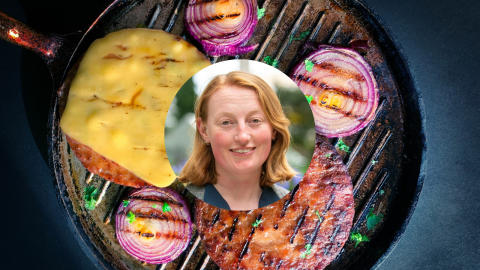

Sarah Newton leads the Food System Team at Birmingham City Council where she has been on a mission to unite the inspiring people behind the city’s many diverse food system projects under the Birmingham Food Revolution movement. Her role involves applying behavioural science and strengthening city-wide partnerships to develop and deliver the co-produced Birmingham Food System Strategy which aims to transform the city’s communities, environment and economy in order to regenerate the food system.

Shreya is Campaign Officer, Beans is How at the SDG2 Advocacy Hub, working on project planning and implementation, creative activations, strategic communications and public mobilisation. She has a background in Sustainable Development Goal-focused and social impact projects and communications. She has previously worked at UNICEF’s Global Partnership to End Violence Against Children, UNESCO and as a journalist. Shreya holds master’s degrees in Global Media and Communications from the London School of Economics and the University of Southern California.

Iain is Associate Pro-Vice Chancellor at the University of Kent. He is a Professor of Sociology and co-leads the University's flagship civic mission on the Right to Food. He is involved in a range of projects committed to combatting food poverty and to the development of a healthier and more sustainable food system in the county.

Caspar is the Senior Research Leader, Crops and Global Change at the Royal Botanic Gardens, Kew. His background is in plant science, with an interest in how plants respond to drought and elevated carbon dioxide. For the past 10 years or more he has been researching bean crop climate resilience and how to improve bean diversity and traits to improve farmer yields under stress.

Dr Monika Zurek is a titular associate professor and Lead of the Food System Transformation Group at the Environmental Change Institute at the University of Oxford, UK. For more than 25 years she has worked on food systems change, environment and development interactions with foresight methods in research, international organisations and in the consulting and the philanthropic sector. Prior to joining ECI in 2015, Monika worked with Climate Focus, a consulting firm focusing on climate change mitigation and land use issues. Before that, she was part of the Agricultural Development Team of the Bill & Melinda Gates Foundation managing grants to improve the environmental sustainability of agricultural systems and risk management in agriculture. She also served as an economist at the Food and Agriculture Organization (FAO) and supported the Scenarios Working Group of the Millennium Ecosystem Assessment. Monika started her career as a researcher at the International Maize and Wheat Improvement Center (CIMMYT), working on agricultural sustainability projects in Costa Rica and Mexico. She was also a lead author for various environmental assessments such as the Intergovernmental Panel on Climate Change (IPCC, AR4), the Millennium Ecosystem Assessment and the International Assessment of Agricultural Knowledge, Science and Technology for Development (IAASTD). Monika holds degrees from the University of Hohenheim (MSc equivalent/Diploma in agricultural biology) and Justus-Liebig-University Giessen, Germany (PhD in agricultural economics).


