27 August 2026
How school food procurement could unlock a £1 billion windfall for British farmers
In the week before entering Downing Street, Andy Burnham’s team made clear that public procurement should do more to support British farmers. Schools, hospitals, and prisons are all part of that vision.
A Burnham spokesperson said he wants to use the "power of public procurement to fully support British farmers and producers", while Burnham himself criticised a system that has too long relied on chasing the cheapest deals around the world rather than helping British-based suppliers become more stable and competitive. It is a promising signal and one that sits alongside a wider commitment to use government purchasing power to support British industry and regional growth.
That ambition is already on the record for our current government. In its 2024 general election manifesto, Labour committed to a target of half of all food purchased across the public sector being locally produced or certified to higher environmental standards. Research from the Campaign to Protect Rural England (CPRE) has estimated that meeting that ambition could create around £1 billion in annual value for British farmers through stable, long-term demand.
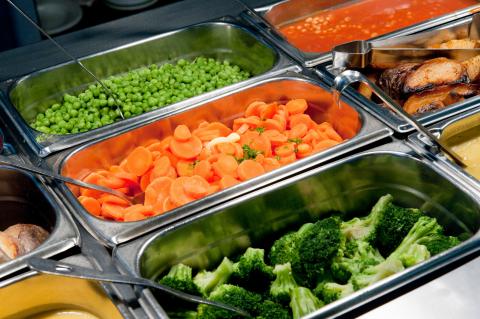
Every year, the public sector spends around £5 billion buying food. Those purchasing decisions carry more power than simply putting food on plates. They can support British agriculture, strengthen local economies, improve sustainability and help deliver healthier diets.
Schools are the biggest piece of the public plate
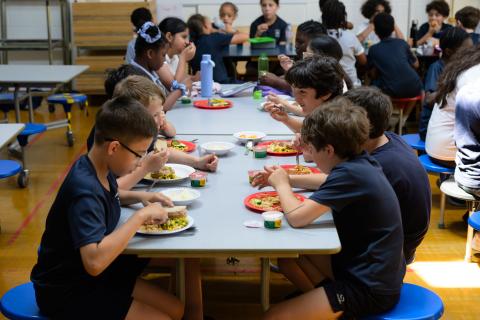
Education accounts for around 60% of all public sector food spending, making schools the largest single purchaser of food across the public sector. England's schools alone serve around a billion meals a year, with roughly £1.16 billion of that going directly towards buying food. Yet while school food debates tend to focus on what children eat, far less attention is paid to how that food is bought.
Procurement is simply the process by which schools and catering providers buy the food that eventually ends up on plates. It shapes what caterers have to work with long before a meal is served and in doing so, it is it is one of the government's biggest opportunities to shape the food system.
The government has already shown real ambition on school food. Free School Meals are expanding to all children in families receiving Universal Credit, the School Food Standards are being updated for the first time in over a decade, and new standards are expected in September alongside a strengthened compliance and monitoring system. This expansion will also significantly increase demand for food in schools. Research shows that extending Free School Meals to all children in households receiving Universal Credit could increase demand for UK-produced food in schools by at least 7%, creating new opportunities for farmers, producers and suppliers across the school food supply chain. Procurement is therefore the natural next step in that work to strengthen our school food system. The proposed standards focus on nutrition and say very little about where the food should come from, how it should be produced or who schools should buy it from.
The Government Buying Standards for Food and Catering Services (GBS), which include expectations on procurement standards such as environmental sustainability and production standards, are mandatory for central government departments, the NHS, the armed forces and the prison service, but not for education settings. Beyond ordinary procurement law, there are currently no equivalent national expectations for how schools source their food.
Strengthening the Government Buying Standards
Extending those standards to schools would be a significant step. But the standards themselves, introduced in 2011, also need updating. The nutrition standards were last revised in 2021 and do not reflect current thinking on fibre, plant proteins and processed foods, while the standards covering environmental sustainability, animal welfare and socio-economic considerations have not been updated since 2014. Defra consulted on updating them in 2022, but the response has still not been published. An independent review into public sector food procurement recommended publishing that response alongside an updated set of standards and noted that the standards have never been officially monitored, so little is known about how well they work even where they already apply.
Thus, the GBS should be strengthened to drive environmental sustainability, local sourcing and stronger production standards. At least half of public sector food should be locally produced or certified to higher environmental standards. Strengthened GBS could help make healthy and sustainable food the norm across publicly funded settings, while creating stronger and more predictable demand for British food. This could support domestic supply chains, particularly British horticulture, pulses, beans, peas and minimally processed plant proteins, giving growers and suppliers greater confidence to invest and helping public menus drive change across the wider food system.
Updating the standards and extending them to schools would thus turn a welcome ambition into something deliverable and measurable.
What good procurement could deliver
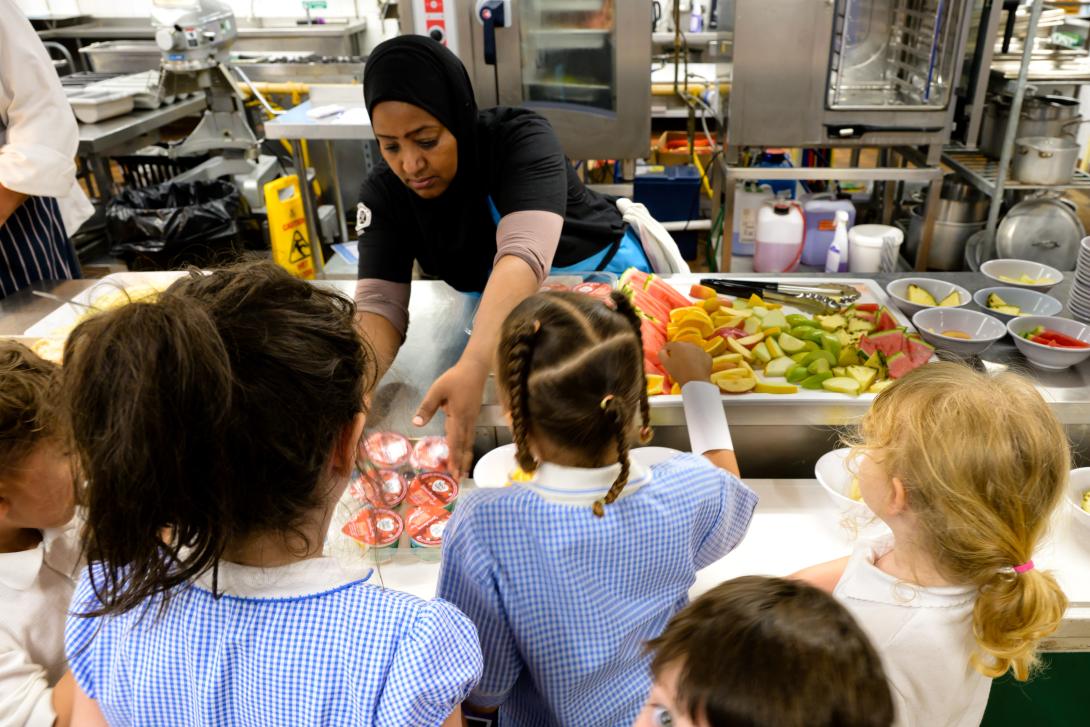
The impacts of procurement are far reaching. For children, procurement affects the quality and variety of ingredients available to caterers. For farmers, it shapes whether public spending creates reliable markets for British produce. For local economies, it can determine whether smaller businesses have a genuine opportunity to compete for contracts. And for the environment, procurement decisions influence food waste, transport emissions and the sustainability of agricultural production.
Done well, school food procurement delivers on several government priorities at once: children's health, rural livelihoods, local growth and climate goals, all through money the public sector is already spending.
Overcoming the barriers
There are barriers to better public food procurement that need to be overcome, but there are also examples of where different approaches are already working.
Catering budgets are under significant pressure, and schools operate in a system where affordability matters. Procurement arrangements are fragmented across local authorities, academy trusts, individual schools and contracted catering providers, so there is no single point at which a new expectation can simply be applied. Small and medium-sized producers can struggle to access large contracts, even where they are ready and willing to supply. And there is little publicly available data on what schools currently buy or where it comes from, which makes progress hard to measure. These are challenges to work through, though, rather than reasons to wait.
CPRE's research also shows that investing in local producers to supply better quality food does not have to cost more. Cost currently dominates public sector buying decisions, with price accounting for between 50% and 80% of contract evaluation criteria, leaving little room to weigh quality or sourcing. But the evidence suggests that cost should not be a barrier to raising standards. For example, Bury Council has awarded £5.6 million in school catering contracts to small, local providers while meeting quality requirements at a lower cost. In Wales, a programme now reaching over 400 schools has delivered a million portions of organic vegetables for an estimated 1.7p to 3.3p more per meal. There may be some upfront investment needed in catering capacity and workforce skills, but evidence from Denmark shows higher standards can be delivered within existing budgets by cutting food waste, using more seasonal produce and increasing plant-based ingredients.
Furthermore, Scotland illustrates what a more integrated approach can look like. Through its National Good Food Nation Plan, school food is connected to wider priorities on health, sustainability, local economies and agriculture. For schools, this demonstrates how procurement can deliver benefits beyond the school canteen, helping to shape healthier and more sustainable food provision while supporting local food economies.
England could take inspiration from this more joined-up approach. Rather than treating school food procurement as a standalone issue, it should form part of a wider strategy linking public procurement with health, environmental sustainability and support for British producers. This would help ensure that changes to school menus and sourcing are backed by the wider coordination and investment needed to make them achievable.
Looking ahead
The Government is rightly asking how public procurement can support healthier diets, stronger local economies and British farming. With Free School Meals expanding and the School Food Standards being updated, there is a rare opportunity to bring the largest purchaser of publicly funded food fully into that conversation.
If public money is meant to deliver public good, there are few better places to start than the food served to our children.