08 September 2026
'People deserve to be able to live a life they actually enjoy'
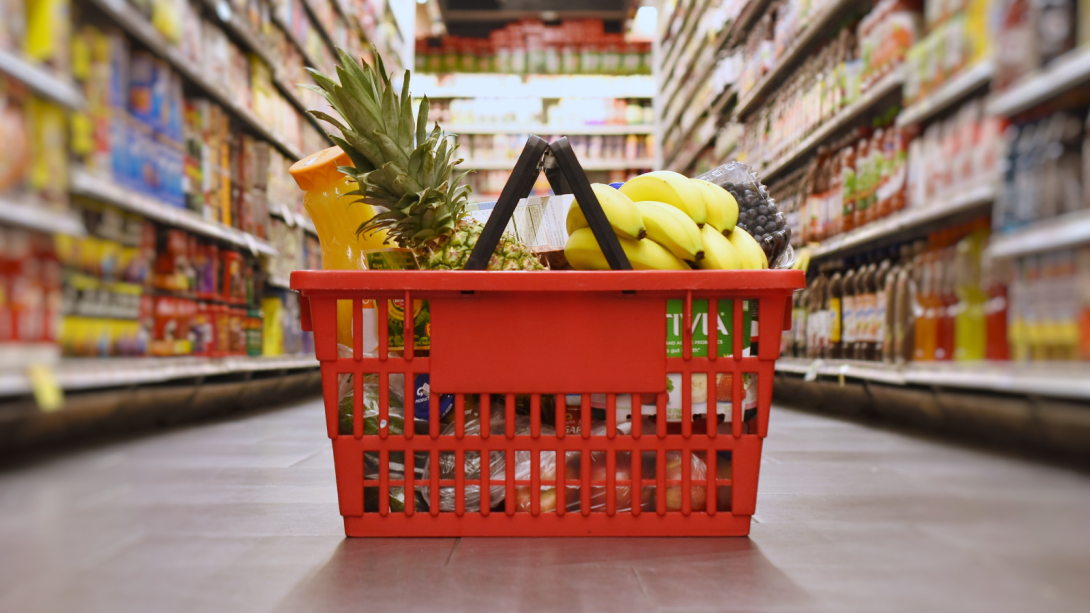
As families across the country struggle to cope with rising food prices, we sat down with Food Ambassador Jamie to talk about the impact of the cost of living crisis, as part of a new blog series featuring perspectives that are often missing from the conversation.
An is an art student living in South Wales, Jamie - like many students - navigates rising living costs while balancing coursework and the uncertainty that comes with building a future.
But for the 21-year-old, the cost of living crisis isn't simply about paying more at the supermarket, but also about changes to the way people relate to one another.
"I see a lot of hopelessness, if I'm honest. And judgement as well," Jamie says.
"Whenever I've had part-time work at supermarkets, I'd hear conversations about people coming through the tills, and anyone who 'looked poor' or 'looked working class' would get scrutinised more. I think there's been a decline in empathy and that's only gotten worse."
Jamie believes the pressures people are under have made it harder to extend compassion to others: "When you're having to struggle more just to provide for yourself, you don't have that space to breathe.
"You don't stop and think that maybe someone else has their own life and their own problems. I think the cost of living is making it harder for everyone to live a happy and substantial life."
Food sits at the centre of this. Thinking back to how dramatically food prices have changed in just a few years, Jamie recalls: "I remember when a weekly shop for my family was about £50. Now it's around £70 for just me and my dad. It's insane."
Jamie’s family aren’t alone in this. In fact, 39% of households say that it's more difficult to afford food than it was a year ago, and 41% are concerned about affording food in the next month.

The changes are visible in supermarkets too, where everyday essentials have increasingly been locked behind security cabinets.
"I remember wondering why all the baby formula was locked up,” Jamie said. “Then you realise it's because people who can't afford it and need it are stealing it. That's horrible."
For Jamie, these moments shouldn't invite judgement but prompt questions on why people have been placed in that position in the first place. Along with steep food price increases, the cost of living crisis brings rising energy bills, housing costs, and stagnant wages that just aren’t enough.
As Jamie says: "Food is part of your household bills as well. It's all connected." That connection becomes even clearer when thinking about who can access healthy food in the first place.
Jamie believes conversations about affordability often overlook the barriers faced by disabled people: "If I walk to the shop, it's about 10 minutes. It's uphill on the way back, but I can do it.
"If you're in a wheelchair, it's a completely different experience. There are places where there's no easy ramp, just staircases. It's another barrier that people don't always think about."
As a student, Jamie also sees how time has become almost as scarce as money. Long days of lectures and coursework often leave little energy for cooking from scratch: "You get home when it's already dark, you've still got coursework to do, and then you've got to think about doing a food shop. It's much easier just to grab fast food.
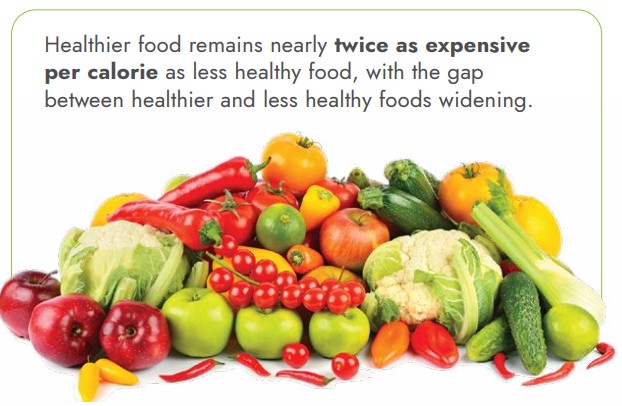
A key finding from our 2026 Broken Plate report
"Then there’s the high costs of healthy food and the additional costs of school materials. You're balancing a thousand things at once."
Despite these challenges, Jamie naturally gravitates towards solutions, repeatedly returning to the importance of community.
One idea the student would like to see become reality is shared student kitchens: spaces where people can cook together, share meals, and build relationships alongside saving money: "A group of people working in the same studio going somewhere to cook a meal together and enjoy it together…That sounds lovely.
But Jamie is careful not to romanticise community as a substitute for meaningful policy change: "I don't want to pretend community is the solution to everything. There needs to be meaningful legislative change as well.
"People need to be able to afford to live first. Then we can build these lovely community spaces around that."
What worries Jamie most is that modern life leaves very little room for either community or rest: "We're constantly working or constantly being entertained. There's very little downtime.
"I'd love to see more spaces where people can just sit together, eat together and talk. That feels like something we've lost."
This belief - that food is fundamentally about bringing people together - also shapes how Jamie thinks about politics. One of the biggest problems, he believes, is that decisions are too often made without genuinely listening to the people living through these experiences.
“It's very easy to tell people what's wrong if you've never had to struggle yourself," Jamie says. "If you don't have those stories being told, it's very hard to appreciate how difficult life can actually be."
Jamie believes lived experience should sit alongside research and statistics when shaping policy. "We need a diversity of voices that say what they actually think."
That's one of the reasons why value the Food Ambassador programme. Citizen voices help paint a picture that data alone never can.
Jamie also believes politicians need to make it easier for people to participate in democracy. Many people simply do not have the time or energy to engage with local politics while trying to make ends meet.
Instead, Jamie believes politicians should do more to meet communities where they are. "Actually listening to people would solve a lot more. MPs are supposed to amplify what their communities are saying. I'd like to see more outreach and more opportunities for people to be heard."
For Jamie, the cost of living crisis is not simply about food becoming more expensive. It is about what happens when financial pressure begins to erode empathy, community and people's belief that things can improve.
Yet despite that, Jamie remains hopeful. Change, Jamie says, starts with listening. Listening to lived experience, listening to communities, and recognising that the people most affected by food insecurity are often those best placed to help shape the solutions.
"We need to hear what people are struggling with so it can be sorted out. People deserve to be able to live a life they actually enjoy."