15 May 2026
Making school food standards watertight: The drinks debate
The government is consulting on the biggest update to school food rules in over a decade. Our Policy and Advocacy Manager Shona Goudie and Senior Policy and Advocacy Officer Tilda Ferree examine what the proposed changes mean for what children can drink at school and why the government needs to go further.
The proposed update to the School Food Standards gets a lot right on drinks. Removing fruit juice from primary schools is an evidence-based, long-overdue intervention.
Fruit juice alone accounts for 15% of free sugar intake in primary-aged children, and a single 150ml portion delivers around three-quarters of a primary child's maximum recommended daily free sugar allowance.
Restricting it from the school environment is the kind of straightforward, structural change that makes a real difference.
But there's a significant gap in the proposals. While primary schools would move to a clean, simple permitted list - water, plain milk, and unsweetened, fortified plant-based alternatives - secondary schools would keep the current, broader list until September 2028, and even after that would be allowed drinks containing non-sugar sweeteners.
The government is consulting on whether this difference is justified. In this blog, we explore why it isn’t. We also explore why water should be freely available from properly maintained water fountains and taps – not sold as bottled water.
The evidence on sweeteners is clear
The proposed changes to the School Food Standards are clear that foods containing non-sugar sweeteners should not be served in either primary or secondary schools - rightly so, given the WHO's 2023 guidance advising against non-sugar sweeteners for children, noting potential undesirable effects from long-term use.
So why does the secondary school drinks list permit drinks that can contain sweeteners? If sweeteners are concerning enough to be kept out of school food, they should be kept out of school drinks too.
The health case is the same for children aged 11 as it is for 10 year-olds
The evidence doesn't change at the school gate on the first day of Year 7. Children who go through primary school under these new standards will spend seven years without sweetened drinks being on offer at school.
They'll have grown up in an environment where water is the default, and where that norm is consistent and unremarkable. That's not a small thing - children's drink preferences are largely shaped by what they're routinely offered, and schools that have adopted water-only policies consistently report that children adapt readily.
Allowing secondary schools to reintroduce sweetener-containing drinks the moment children move up at age 11 risks unpicking habits built during seven years of primary education. The transition to secondary school is already a period of significant disruption to eating and drinking patterns. It's precisely the wrong moment to introduce an inconsistency that is detrimental to children’s health.
A fairer deal for every child
There's an equity dimension here that the proposals don't fully address. Where schools permit a range of drinks for purchase, children on Free School Meals (FSM) are in a different position to their peers. If classmates are buying flavoured waters or branded soft drinks, FSM children either go without or spend money their families don't have - and in the context of a cost of living crisis, that's not a trivial ask.
A consistent, simple drinks list of water and milk for everyone removes that disparity entirely. It also means that for children receiving free school meals, the money that might otherwise go on a drink stays available for food - which is, after all, the point.
More broadly, a stricter drinks list removes the pressure on all families to budget for school drinks on top of packed lunches, travel, uniform and everything else. This is one of those places where a tighter policy is actually simpler and fairer for everyone.
Plastic not only impacting the planet, but children's health
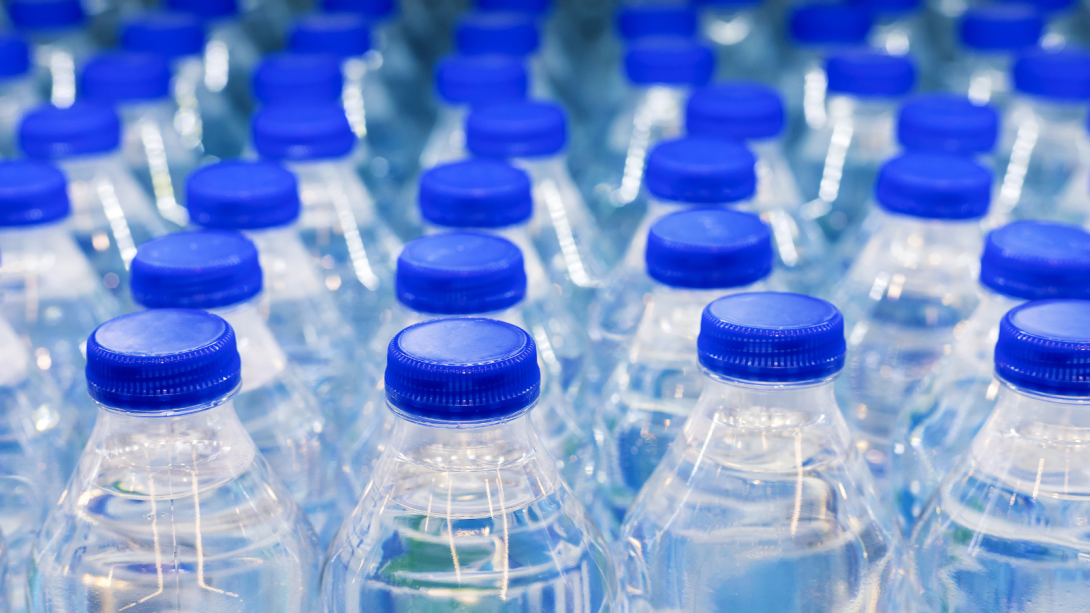
A broader permitted drinks list in secondary schools doesn't just mean more sugar and sweeteners - it means more plastic. Most commercially available drinks consumed in school settings come in plastic bottles.
If a child buys a bottled drink every school day, by the end of secondary school they will have used nearly 1,000 plastic bottles – and there’s 10 million secondary school students.
The health implications of that are increasingly well-documented. Microplastics and chemicals associated with plastic packaging, including endocrine-disrupting compounds, are an emerging area of concern, particularly for children and young people whose hormonal systems are still developing.
Profits over children’s health?
Drinks are often where catering contractors make a significant proportion of their margin. A more permissive drinks list in secondary schools keeps revenue streams open that a stricter list would close.
That's an understandable commercial concern - but it's not a reason to compromise on children's health.
A genuinely restrictive drinks list reduces the commercial pressure to use the drinks offer to cross-subsidise food provision. That pressure, left unaddressed, works against the nutritional quality of the food itself: when a caterer needs the drinks fridge to make their numbers work, the incentive to cut costs elsewhere increases.
There's also a broader point about brand presence. A more permissive list doesn't just allow specific compliant products - it keeps the door open for major drinks brands, many of which also manufacture products high in sugar, sweeteners or both, to maintain visibility in school environments.
Even where the product on offer is technically within the rules, the brand is in the room. A consistent, tight drinks list across all year groups closes that door. The government's wider ambitions on children's health shouldn't be compromised to protect market access for companies whose core business is selling sweetened drinks.
The government have proposed a phased approach to introducing changes to drinks for secondary schools but with the final destination for secondary schools remaining a more permissive list than primary schools.
The government should use the transition period to move secondary schools toward full alignment with primary standards, with a firm commitment to reviewing and tightening the secondary school list to align with the primary school standards.
Water access is basic human right
None of this works unless free, clean, accessible drinking water is genuinely available throughout the school day. This is already a legal requirement but it shockingly isn't consistently delivered.
Research has found that students frequently cannot access free water easily, with broken fountains, inconvenient locations, and concerns about hygiene around jugs in dining halls all cited as barriers. Where children can't trust or find a water source, they won't use it regardless of what else is or isn't on offer.
Restricting the drinks list must be accompanied by ring-fenced funding for water fountain installation and maintenance in secondary schools. Access to free drinking water should also be subject to regular external monitoring by an appropriate inspection body, not left to self-reporting.
A child who has to hunt for a working fountain, queue at a single tap, or avoid a dirty jug will simply go without. Dehydration in school is a real and documented problem, and it would rightly be cited as a reason to challenge any stricter drinks policy if government doesn't take water access seriously as part of the same package of reforms.
"At my school, many of the students on FSM allowance use a lot of it on drinks. We’ve always had malfunctioning water fountains, so you have to buy water or other drinks. Buying bottles all the time has an environmental impact but there is also an issue with so many students opting for the unhealthy drinks, which are cheaper" - Aliza, 17, Halifax
The Bottom Line
Allowing secondary schools, a broader list of sweetened drinks under the new standards would be a missed opportunity to improve children’s health and cement the long-term benefits of the improvements to primary school drinks provision.
The changes present challenges; to caterers relying on drinks for revenue, and schools struggling to maintain free water provision. But these challenges are not insurmountable with improved funding models, monitoring and support.
Moreover, the challenges of shifting to water and milk only schools are more than justified given the benefits to children’s health and the planet.
The consultation on the School Food Standards closes on 12 June 2026. You can respond online via the DfE consultations portal here.
- This blog is the first in a series as we unpick school food standards. Look out for more on our website and social media channels.
With thanks to our funder

Shona joined The Food Foundation as a Project Officer in 2019 and has worked on research, policy and advocacy across a range of projects over that time including leading our food insecurity surveys and flagship annual Broken Plate reports. She now works across the charity's policy portfolio including our children's food campaigns, food insecurity and food environments. She is a Registered Associate Nutritionist with a background in clinical nutrition who worked in dietetic departments in NHS hospitals before joining The Food Foundation.

Tilda joined the Food Foundation’s Peas Please team in June 2022 as a Citizen Engagement Officer, to support the Veg Advocates to deliver local initiatives that drive up veg consumption. After graduating, her passion for food and people led her to volunteer at a local youth group, where she was cooking and creating games for teenagers. She went on to work for a range of NGOs, where she was advocating for young people facing challenges in the care, asylum and criminal justice systems. Throughout this work, Tilda became passionate about the power of people and grassroots organisations to change systems. In her free time Tilda loves to swim, chat, cook and eat.