22 April 2026
Food Prices Tracker: April 2026
By Katina-Leigh Taylor
What’s happening to food prices in the UK?
Latest data from the Office of National Statistics finds that food and non-alcoholic beverage inflation this month has increased from 3.3% in the 12 months to March 2026 to 3.7% with current overall inflation at 3.4% (CPIH).
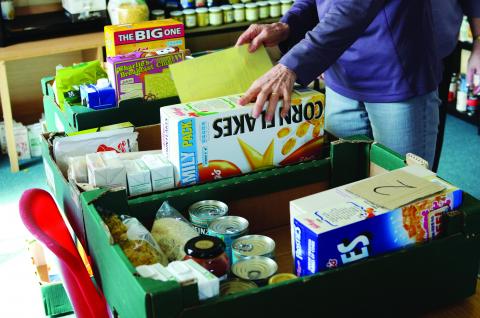
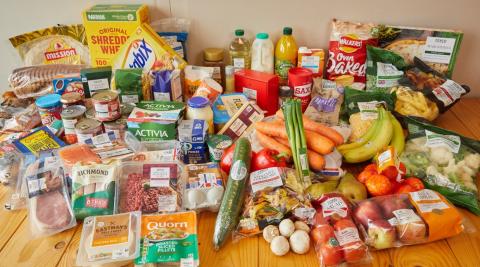
These inflationary changes are continuing to impact on people’s ability to afford the food they need each week. The Food Foundation’s Basic Basket tracking the cost of a weekly shop has seen the cost of the woman’s basket of food now costs £52.98 per week, with the male basket costing £59.38 per week, an increase since April 2022 of 29.2% and 36.4% respectively. To find out more about the Basic Basket, please click here.
A recap of trends and drivers of UK food prices since 2023
What we can expect to see amidst the Middle Eastern conflict?
While it is too early to attribute any specific price movement to the current conflict in the Middle East, historical data suggests this geopolitical instability is expected to translate into food prices.
The UN’s Food and Agriculture Organisation reported a 2.4% rise in its global commodity index in March 2026, with vegetable oil and sugar seeing the sharpest rises. The conflict has pushed up energy prices that feed directly into the cost of moving, processing and producing food, with around a third of global fertiliser production travelling through the Strait of Hormuz, UN projections indicate that global prices could average 15% to 20% higher in the first half of 2026 if crisis persists.
In the UK, the Food and Drink Federation, has revised its food inflation forecast in light of recent geopolitical events. Previously, the FDF forecast that the rate of food inflation would gradually ease in 2026, ending the year on around 3%. However, given the closure of the Strait of Hormuz and impact on oil and gas facilities in the Middle East, they now anticipate that food inflation will reach 9% by the end of the year.
Similarly, The IGD has developed an updated model for what lies ahead based on the effects of Russia’s invasion on the Ukraine.
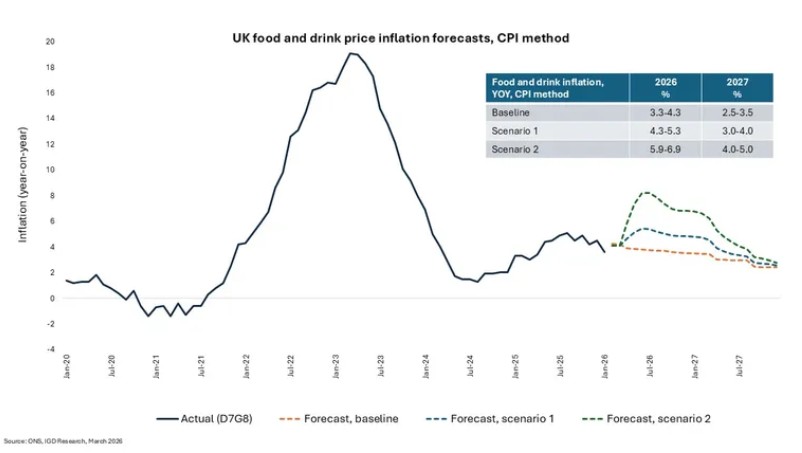
Scenario 1: Short, moderate energy price shock could see oil prices rise by around 50%, gas prices by around 63%. This disruption could last around 3 months, followed by a relatively quick return towards long run averages. Under this scenario, conflict could lift food inflation by around 1% in 2026, taking average inflation to 4.8%.
Scenario 2: Short, intense energy shock could see oil prices rise by around 150% and gas prices by around 250%. This disruption could last up to three months, followed by a return towards long-run averages. Under this scenario, inflation could be around 2.6% higher, lifting average food inflation to around 6.4%.
These projections assume a gradual return to stability, but more severe or prolonged conflict, combined with continued climate-driven supply disruptions could still push prices significantly higher.
What comes next?
With food prices facing pressure from multiple directions, the outlook for UK households remain uncertain. We will continue to monitor the situation closely and provide monthly updates in this blog series. If you’d like to be kept informed as the situation develops please sign up to our newsletter.